SALT LAKE CITY & WASATCH FRONT 24/7 ROOF DISPATCH
On-Call Licensed Utah Contractors • Ice Dam Steaming & Canyon Wind Tarping • Zero Web Forms
TPO & PVC Seam Welding • Drain Unfreezing • Tapered Insulation Systems

Commercial Low-Slope Roof Snowmelt Ponding Repair in Salt Lake City, UT

Low-slope and flat roofing systems on commercial buildings, industrial warehouses, and modern residential structures across Salt Lake City and the Wasatch Front face severe structural challenges during winter. Heavy lake-effect snowpack places immense dead loads on roof joists, causing deck deflection that creates deep standing water ponds. When drainage sumps freeze, ponded snowmelt exerts thousands of pounds of hydrostatic pressure against single-ply seams. Our dispatch desk connects commercial property managers and owners with on-call licensed low-slope roofing contractors.

DISPATCH HOTLINE: (888) 208-4155

Key Technical Engineering Protocols • Salt Lake Service Desk

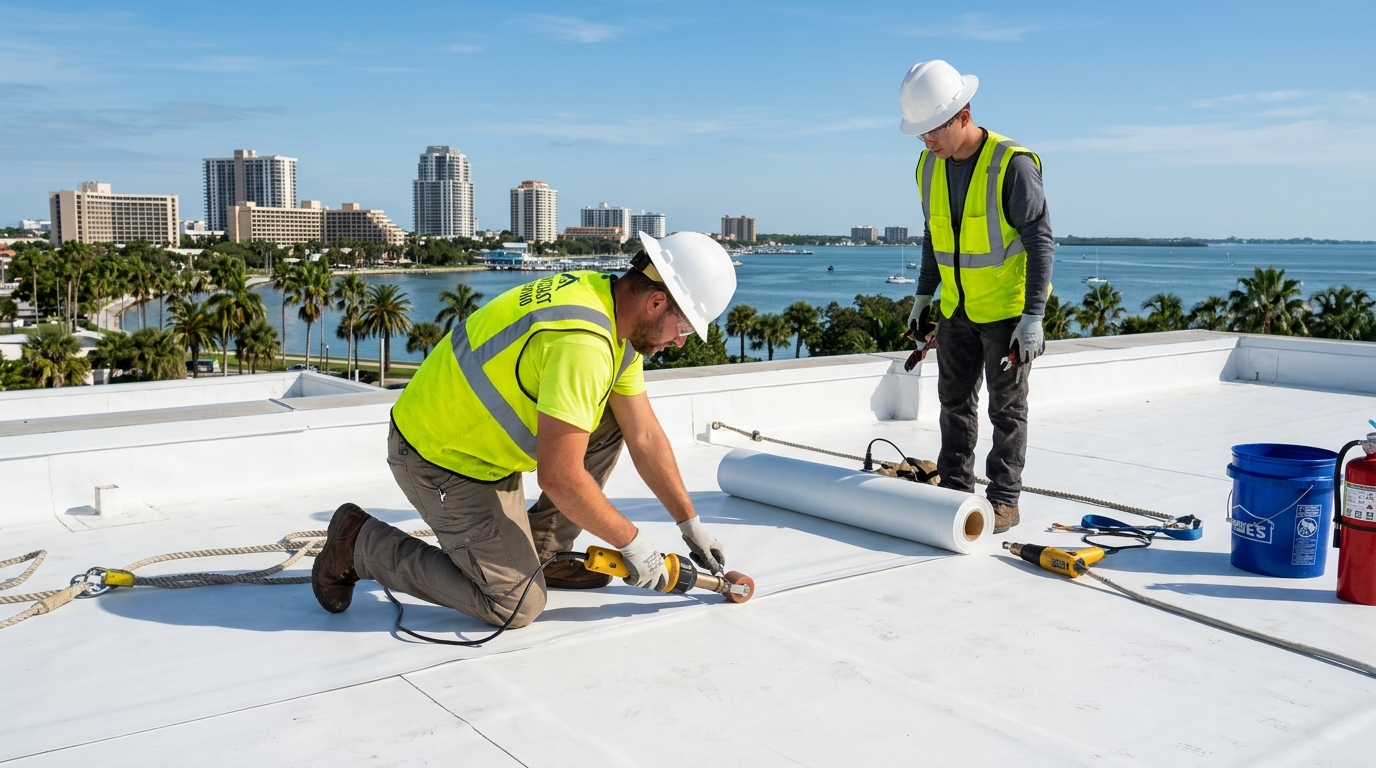
  • Protocol 1: Hot-Air Welded TPO and PVC Membrane Patches creating permanent molecular seam bonds.
  • Protocol 2: Low-Pressure Steam De-Icing of frozen interior drainage sumps and exterior overflow scuppers.
  • Protocol 3: Electronic Vector Mapping & FLIR Thermal Thermography identifying saturated insulation cores.
  • Protocol 4: Utah DOPL Licensed Commercial Roofing Contractors experienced in Wasatch snow load codes.

1. Regional Microclimate Dynamics & Severe Storm Exposure in Salt Lake City

Wet Wasatch snowpack can weigh between 20 and 40 pounds per square foot. On low-slope roofs with minimal pitch (1/4 inch per foot), this extraordinary weight causes structural deck deflection between joists, forming concave depressions. As daytime temperatures melt surface snow, runoff flows into these depressions. If interior roof drains or exterior scuppers are blocked by frozen slush, ponds exceeding 48 hours in duration break down membrane adhesives, saturate underlying polyiso insulation, and stress parapet wall flashing transitions. In older built-up asphalt roofs, standing meltwater accelerates alligatoring and blister blowouts, while in single-ply systems it softens seam tapes and delaminates factory edge welds.

2. Non-Destructive Moisture Diagnostics & FLIR Thermal Tracing

Technicians employ non-destructive electronic leak detection (vector mapping and high-frequency capacitance testing) combined with FLIR thermal thermography to locate membrane micro-punctures beneath standing water. Thermal scans conducted after dusk reveal wet insulation pockets because saturated polyiso board retains daytime heat longer than dry roof assembly areas. Technicians also evaluate core cut samples to verify whether moisture has reached structural corrugated metal decking or concrete substrate slabs. Gravimetric laboratory testing of insulation samples can be performed to document precise water saturation percentages for commercial property casualty claims, providing forensic proof of structural insulation compromise.

3. Step-by-Step Substrate Restoration Methodology

Emergency response begins with clearing frozen ice dams from internal roof drains and exterior overflow scuppers using heated glycol line steamers to re-establish positive drainage. Technicians then dry target membrane sections and apply robotic hot-air welding equipment to fuse reinforced TPO or PVC membrane patches across compromised seams. For severe ponding depressions, permanent restoration includes the installation of high-density expanded polystyrene (EPS) tapered saddles and crickets, coated with high-solids silicone elastomeric restorative coatings rated for permanent ponding water immersion. Technicians also install non-penetrating rooftop pipe and conduit supports to eliminate puncture risks caused by thermal pipe movement. Secondary overflow scuppers are re-cut at code-specified elevations to guarantee continuous positive overflow escape even during multi-day blizzard conditions.

4. Utah State Building Codes & Contractor Licensing Compliance

All commercial low-slope repairs comply with Salt Lake City Commercial Building Code amendments and the 2021/2024 International Building Code (IBC) Section 1507.10. Dispatched roofing contractors carry Utah DOPL commercial licensing endorsements with complete bonding and statutory workers' compensation coverage. Membrane assemblies adhere to Factory Mutual (FM) 1-90 wind uplift ratings, ensuring perimeter parapet flashings remain anchored during 80+ MPH downslope canyon gusts.

5. Preventative Property Maintenance & Storm Preparedness

Commercial building owners should implement semi-annual flat roof maintenance programs in October and April. Routine maintenance should include clearing roof drains and strainers, checking parapet termination bars and counter-flashing sealants, and testing secondary overflow scuppers. Installing heated drain ring retrofits ensures drainage sumps remain free of ice blockages throughout freezing winter storm cycles.

Need Immediate Roof Repair Dispatch in Salt Lake or Wasatch Front?

Our dispatchers connect you directly with certified on-call roofing crews ready with commercial de-icing, thermal cameras, and emergency tarping materials. Zero waiting for web form replies.

SPEAK WITH ON-CALL ROOFER: (888) 208-4155